Welcome to a new day full of tourist adventures during our city trip in Kyoto! Get up early, beautiful weather and lots of tourists! Today, I focus on Kyoto’s highlights, noticing the abundance of Chinese visitors more than the historic buildings.
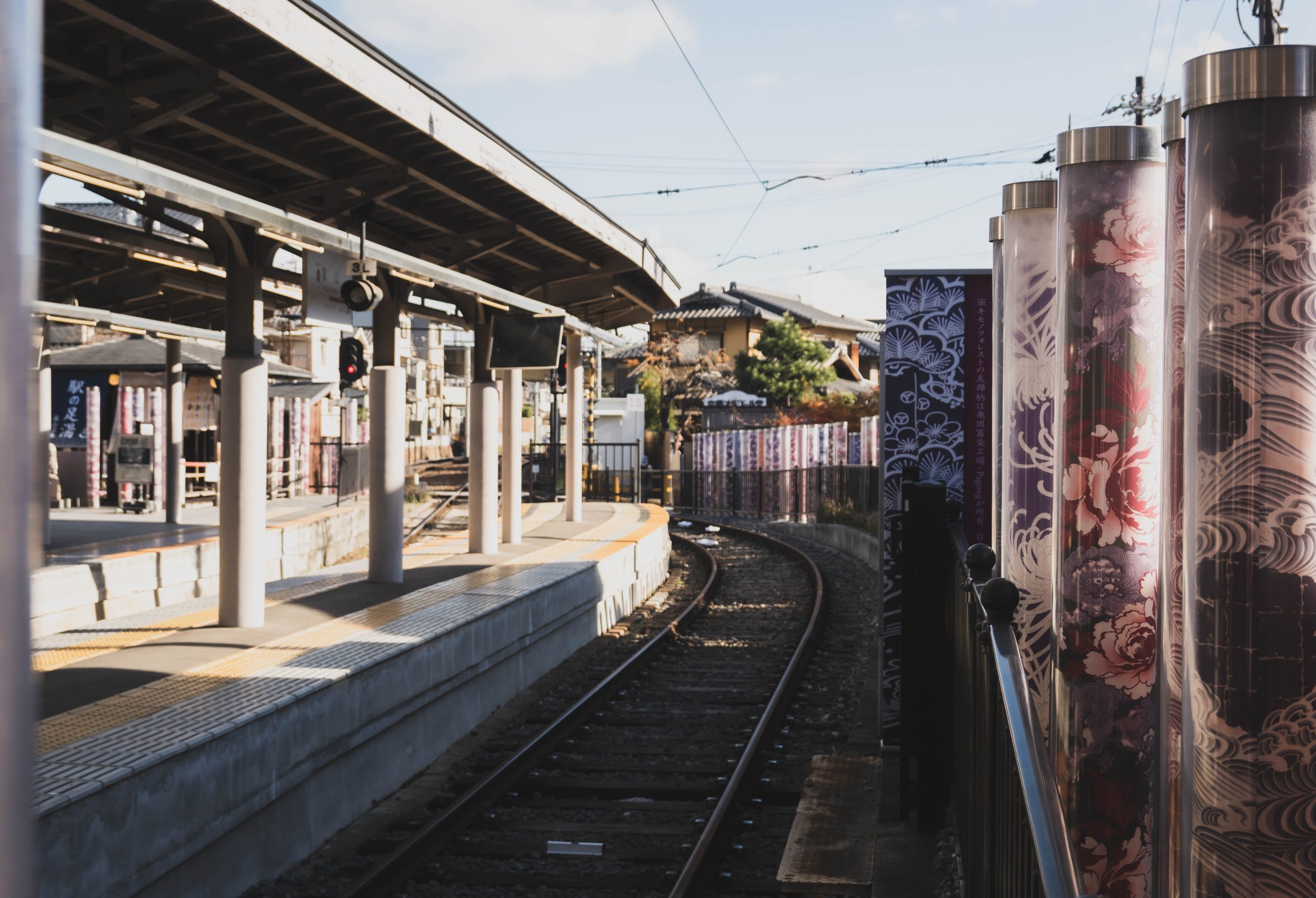
After a refreshing night in Japanese style, we are ready for a new day. We get up early in the hope of beating the crowds and start our journey towards Arashiyama. Western Kyoto hosts this area, reachable by public transport within about 30 minutes, depending on your starting point. Departing from the city center on a local train, the scenery transitions gradually toward Kyoto’s outskirts. Approaching Arashiyama, the train fills up, highlighting our late start and the bustling tourism in Kyoto.
Past the highlights of Arashiyama
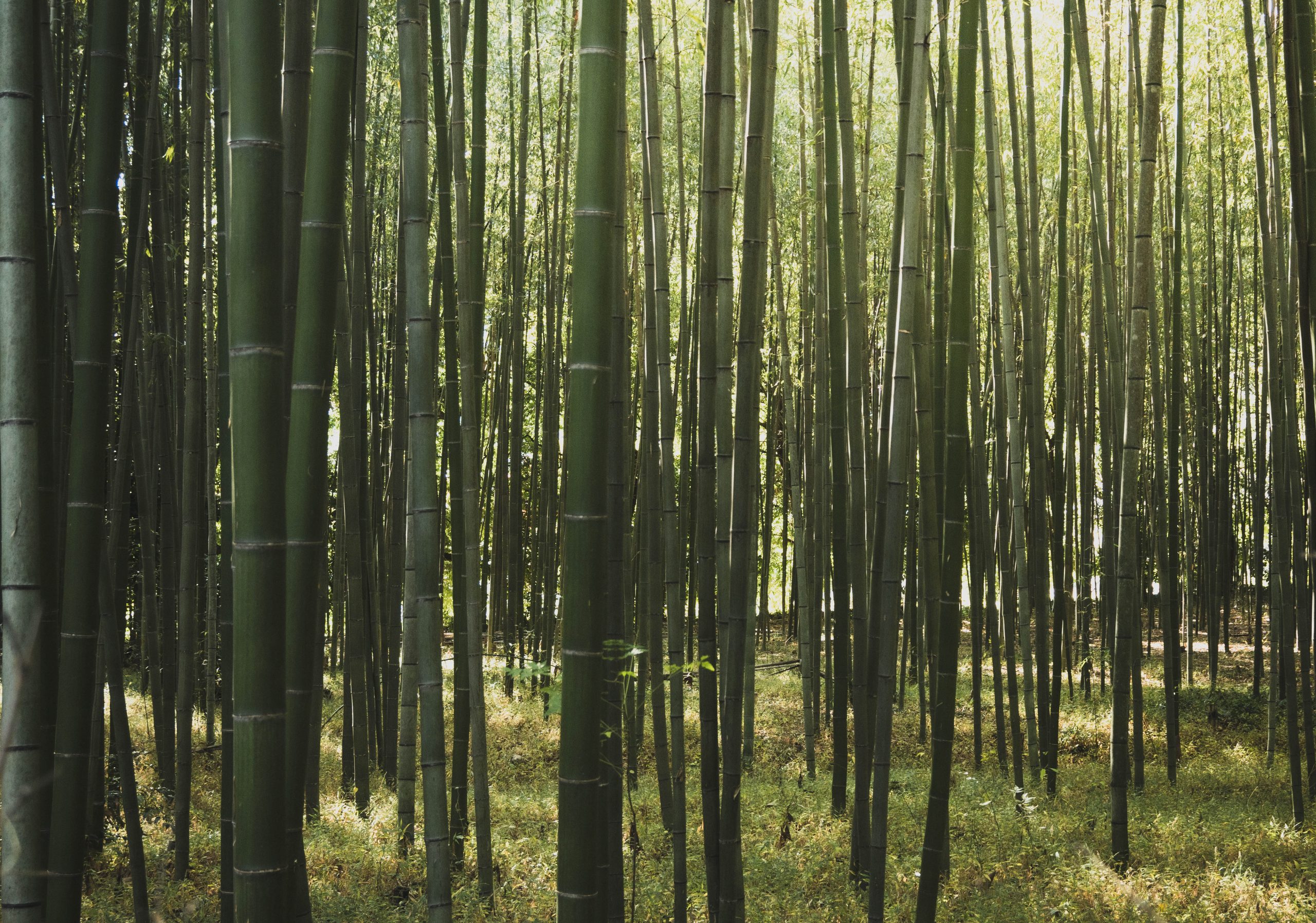
Once we arrive, we immediately find ourselves in a tourist bustle. Opting to begin with the renowned bamboo forest, we join hundreds of tourists on our way to this Kyoto attraction. Disappointed, Thomas and I exchange looks amidst the crowds of couples in traditional attire and selfie sticks. The bamboo forest is stunning, but the crowds make us decide it’s not worth venturing further after a short stroll. We turn off at Tenryu-ji Temple and explore the peaceful gardens of this attraction.
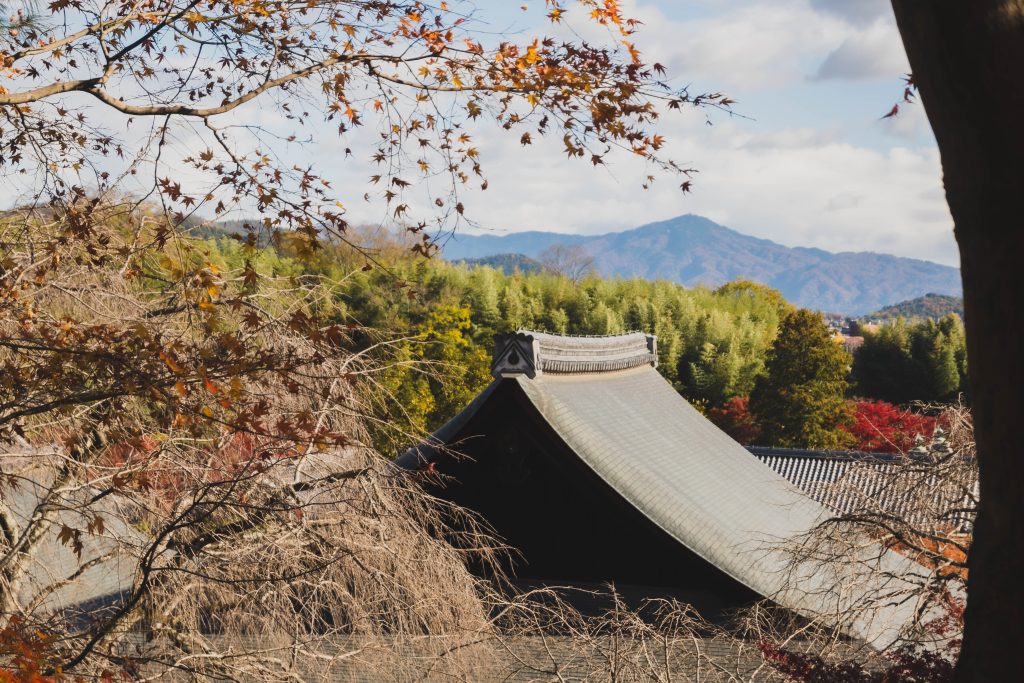
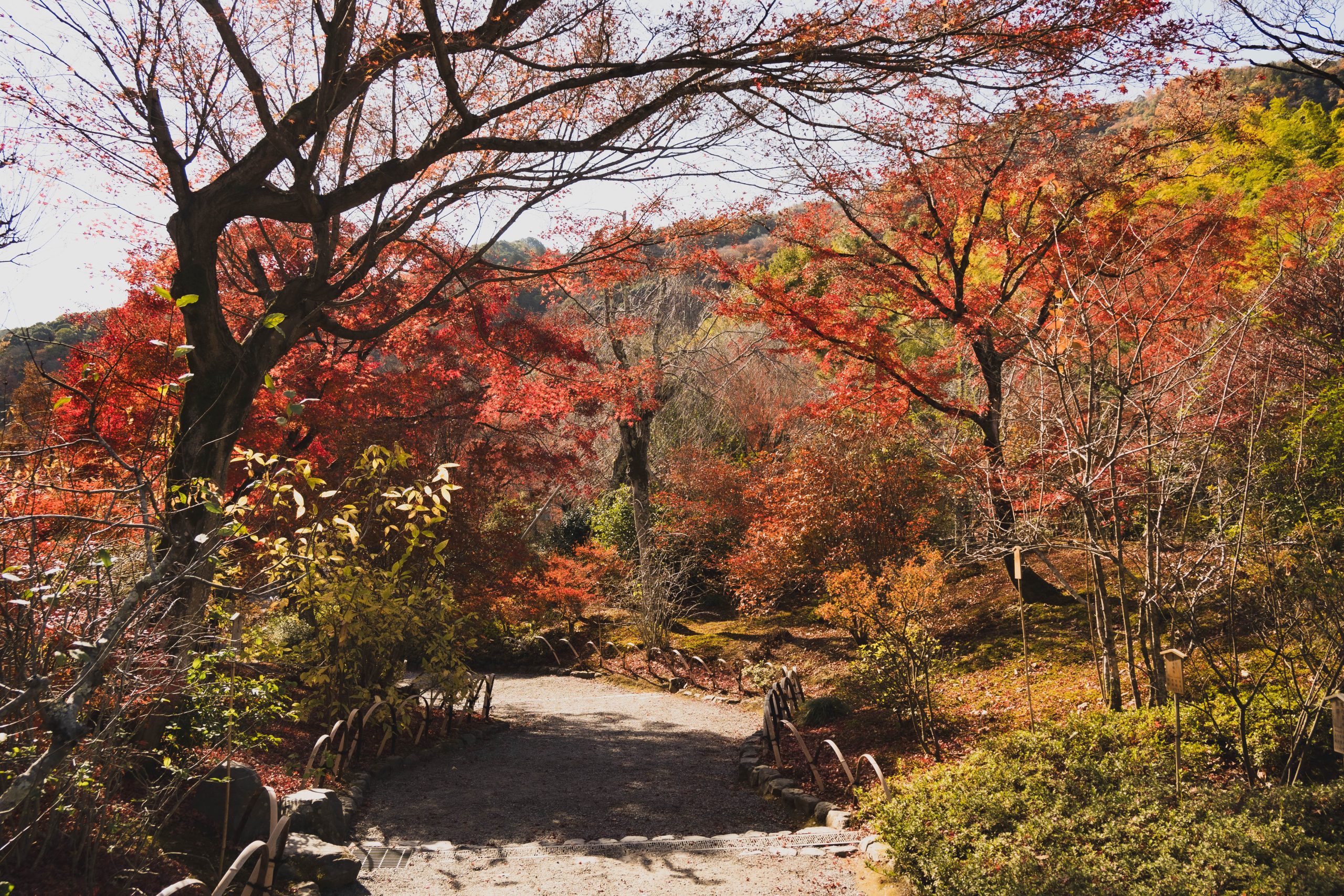
The red leaves of the Japanese Maple trees are breathtaking and we enjoy the rippling water and the view of the mountains covered in autumn colors. But here too, Chinese visitors are present in large numbers, and I am easily distracted by their behavior. Although I previously had difficulty distinguishing between Chinese and Japanese, I now clearly see and hear the difference between the two peoples. The Japanese are reserved, talk softly, show respect for others and try not to bother anyone, unlike the Chinese who behave as if the whole world is theirs, are loud and become almost pushy with their selfie sticks. While the sun shines, we take a moment to observe this spectacle. It’s just plain frustrating to watch.
To stand in line
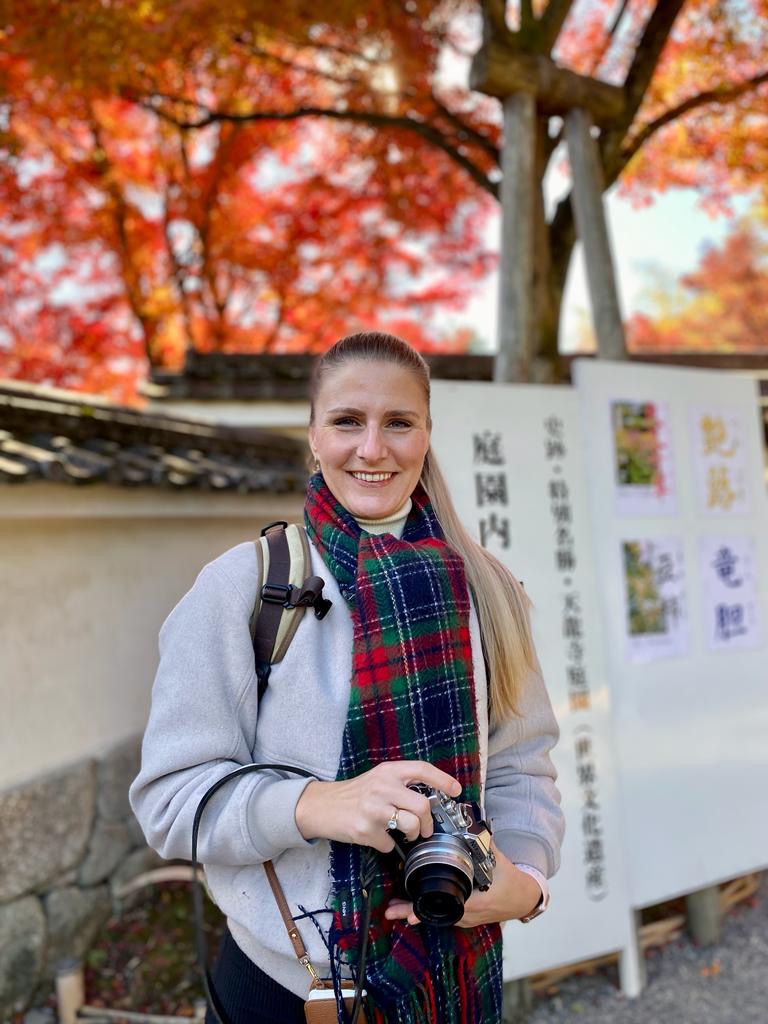
We decide to stop being influenced by these people and let it go. It’s time for lunch and we look for a place to eat. Thomas found a restaurant on Google with good reviews where we can eat udon, which should be opening about now. As we approach the restaurant, we are surprised to see that there is already a large crowd waiting outside the door.
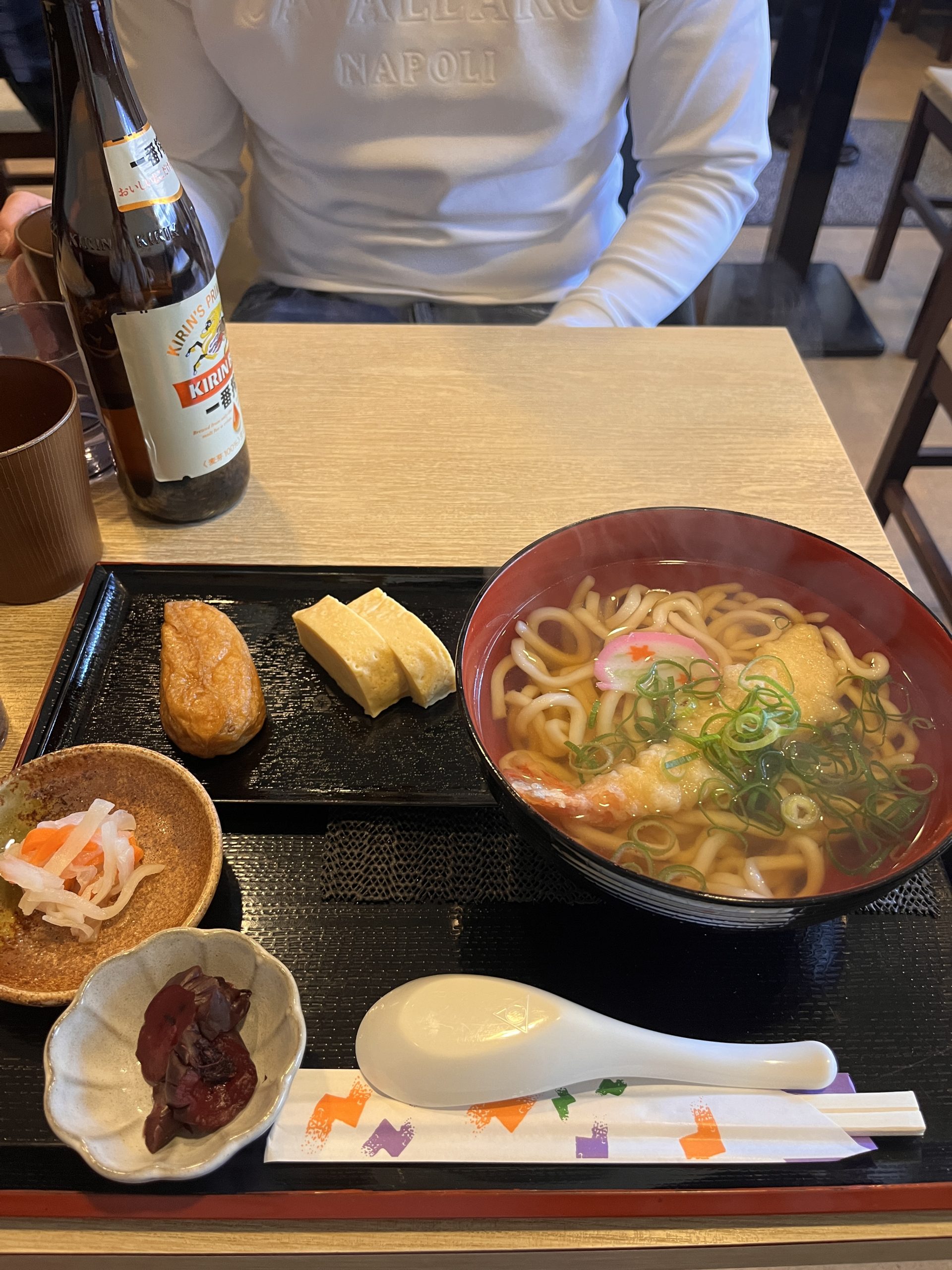
One of the many things that Thomas and I don’t yet understand is that Japanese people like to wait in line for their favorite restaurant, even if they sometimes have to wait up to an hour before they can enter. We think life is too short to stand in line for our food, so we decide not to participate in this circus and continue walking. We eventually end up in the restaurant of two older Japanese ladies, and surprisingly enough, this place is completely empty. At Bon Bon Soba we are warmly welcomed and soon enjoy one of our tastiest meals in Japan.
Walking along the Katsura River
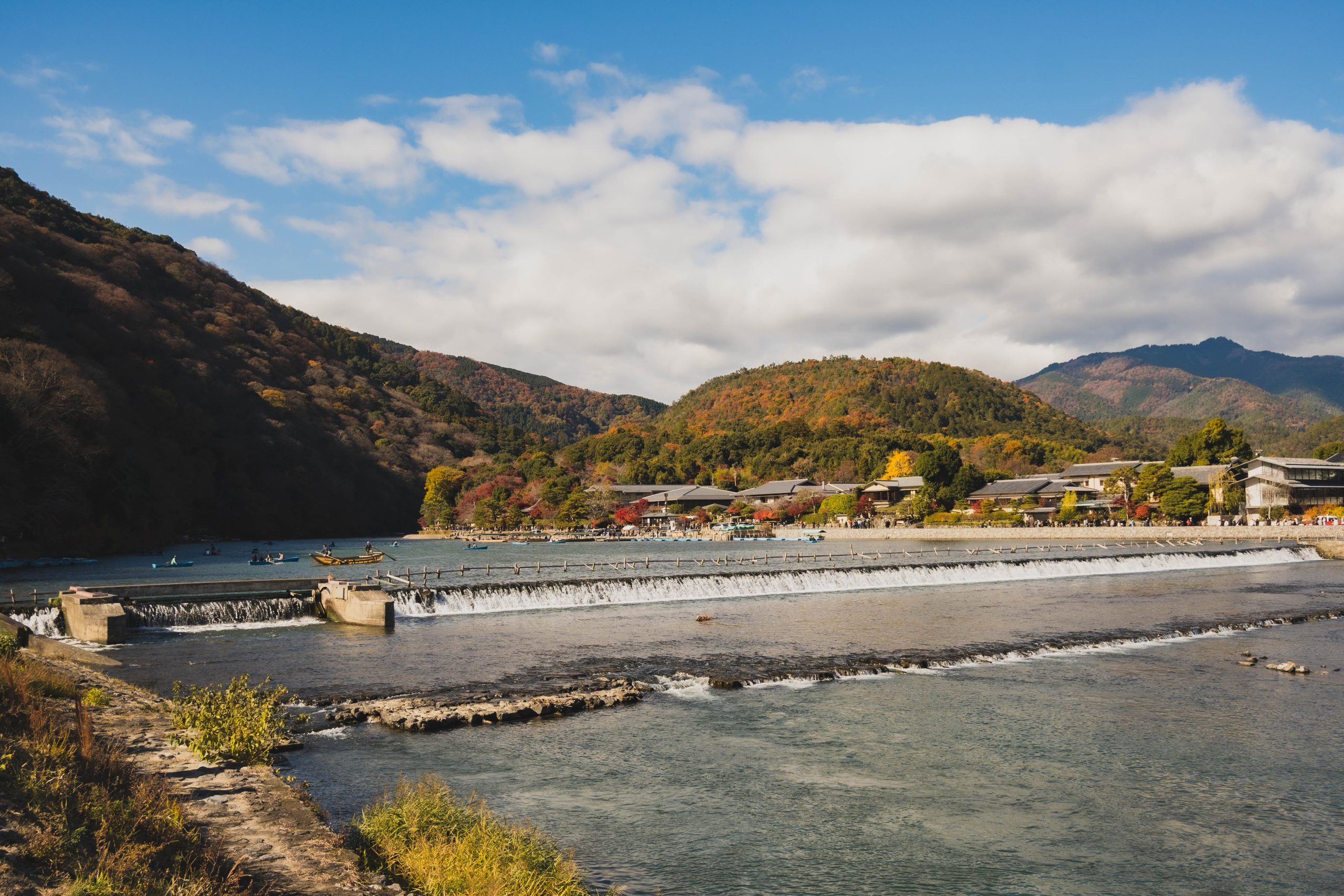
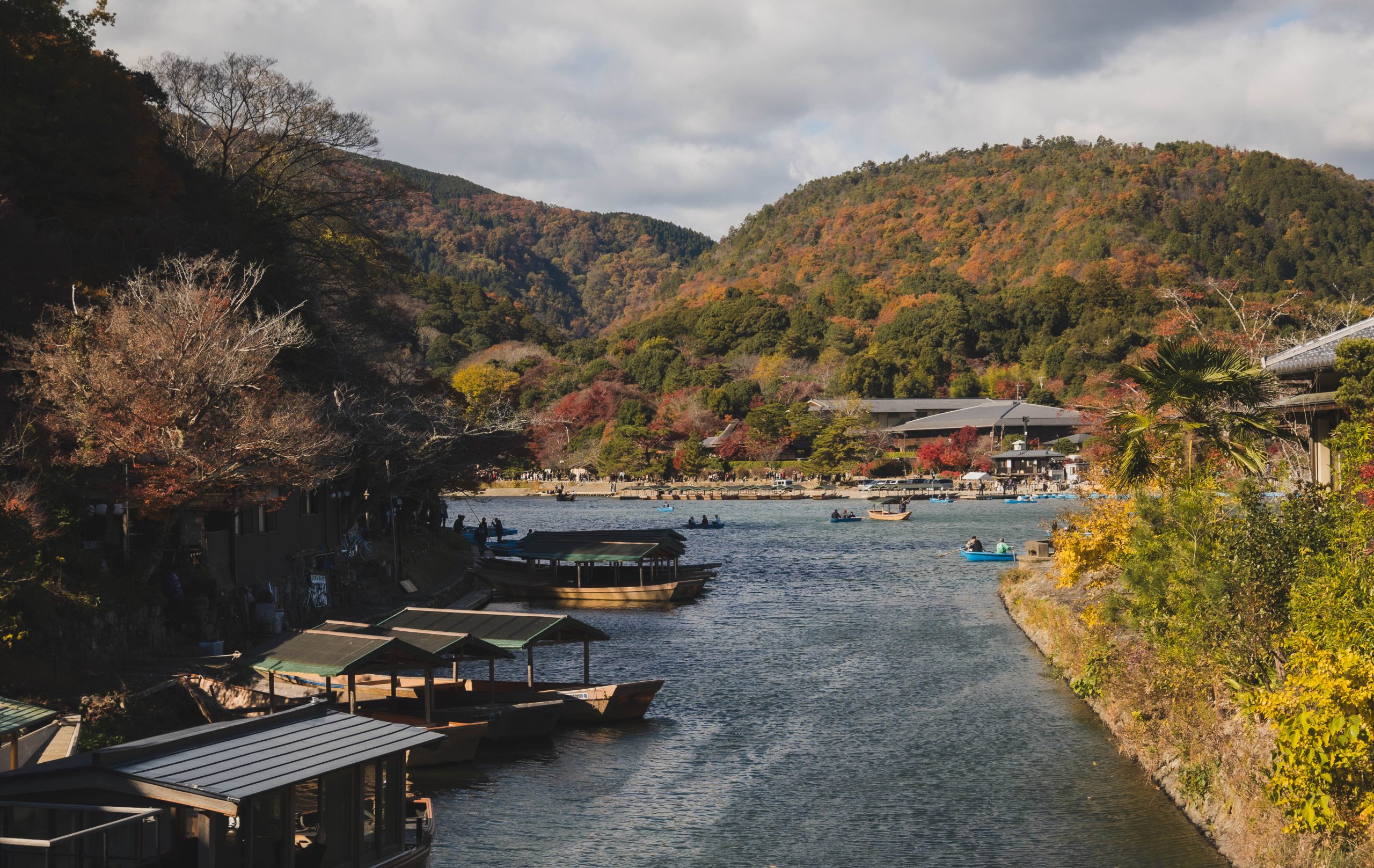
We continue our walk and walk across the Togetsu-kyo Bridge with the rest of the crowd. It has a spectacular view over the Katsura River where traditional boats sail and people move around with a pedal boat. In the distance you can see the mountains covered with an autumnal color palette. I’ve read that the Monkey Park at the top of the hill is one thing you shouldn’t miss when you’re here and since it’s quite a climb up, I secretly hope that this is impossible for most tourists. Normally I’m not a big fan of zoos or tourist events that involve animals, but because these monkeys live here in the wild, I wanted to give it a chance.
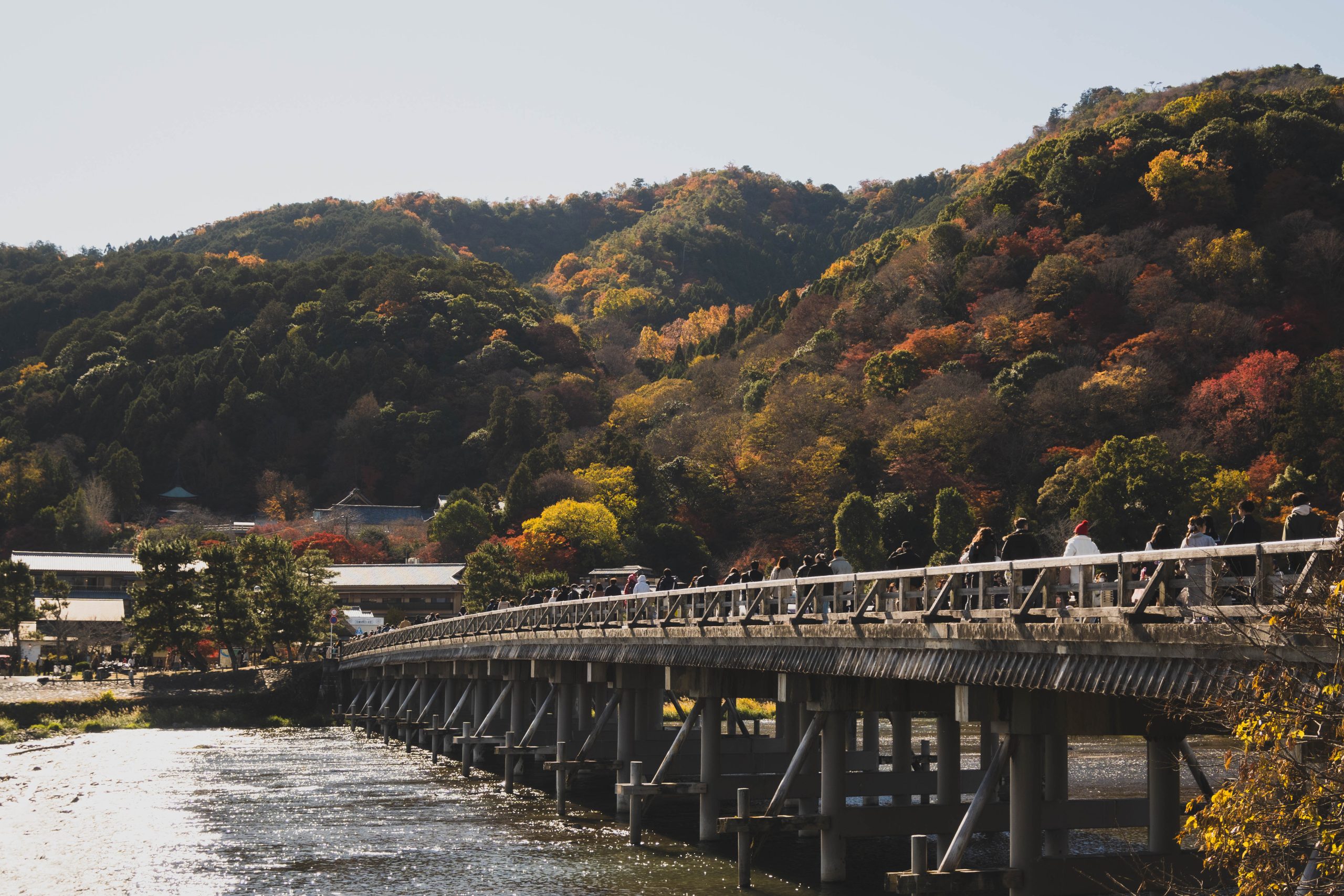
We continue our walk and walk across the Togetsu-kyo Bridge with the rest of the crowd. From here we enjoy a spectacular view over the Katsura River, where traditional boats sail and people travel with pedal boats. In the distance we see the mountains covered in a color palette of autumn hues. I’ve read that the Monkey Park at the top of the hill is a must-see while you’re here. Since the climb to the top is quite steep, I secretly hope that most tourists do not dare to do this. Normally I’m not a fan of zoos or tourist attractions with animals, but since these monkeys live here in the wild, I wanted to give it a try.
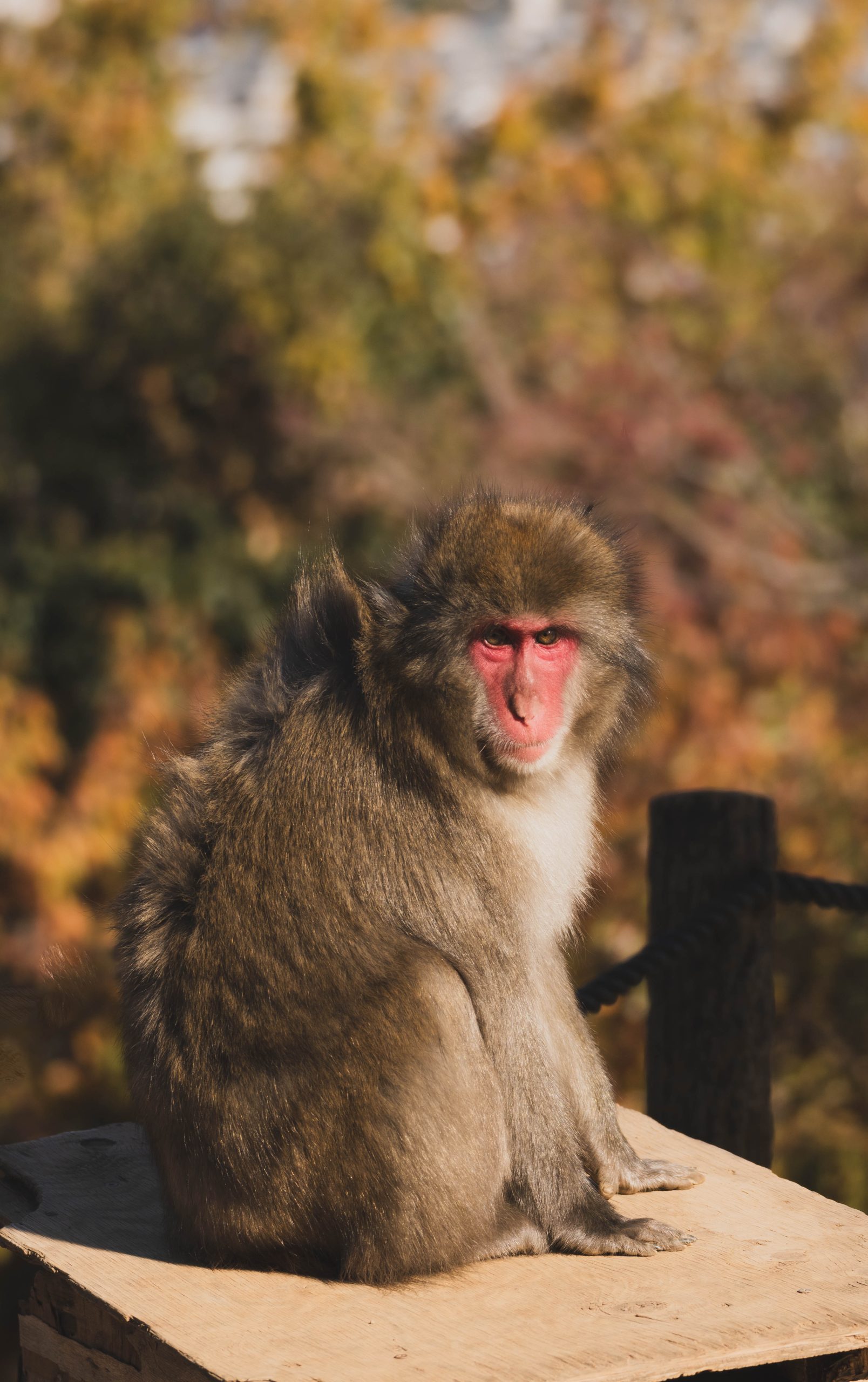
After we have paid our entrance, we slowly start the walk up. It is a beautiful route and today the weather is also beautiful, even a bit warm. Along the path there are informative signs about the different monkey species that live here, what they eat and how you should and should not approach them. As we get higher, it becomes more and more quiet. We spotted our first Japanese macaque, also known as snow monkey, as he quietly sunbathed on a rock, completely undisturbed by our presence.
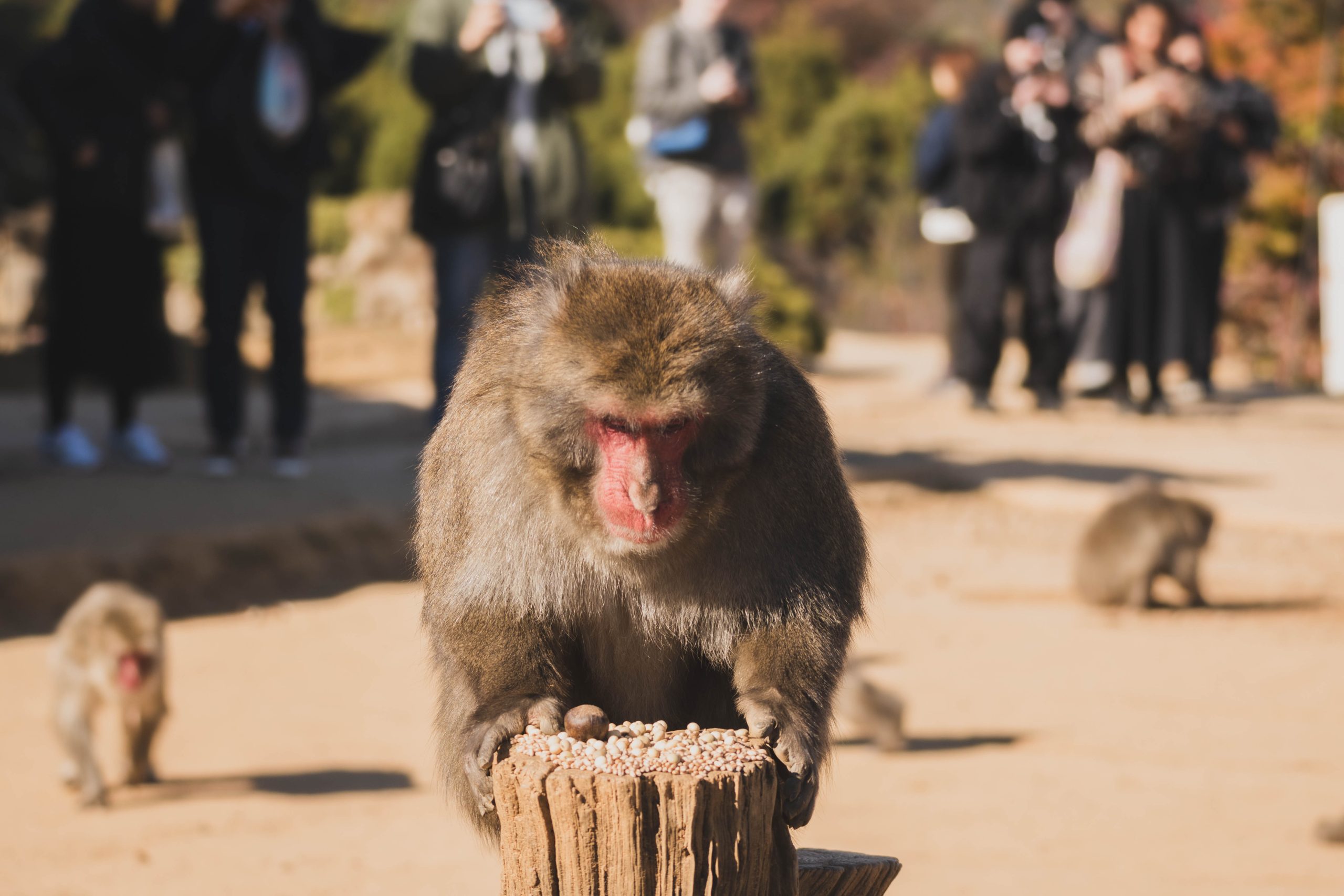
Further on we are surrounded by more and more monkeys. Some look at us curiously, while others argue with a family member. So far, everything isn’t too bad for me, until suddenly a “funny” music starts playing and food is scattered, causing all the monkeys to run like crazy towards the food. There is even a hut where you can buy food to feed the monkeys. So all of this has a bit to do with entertaining tourists through animals and I think that is a bit of a shame.
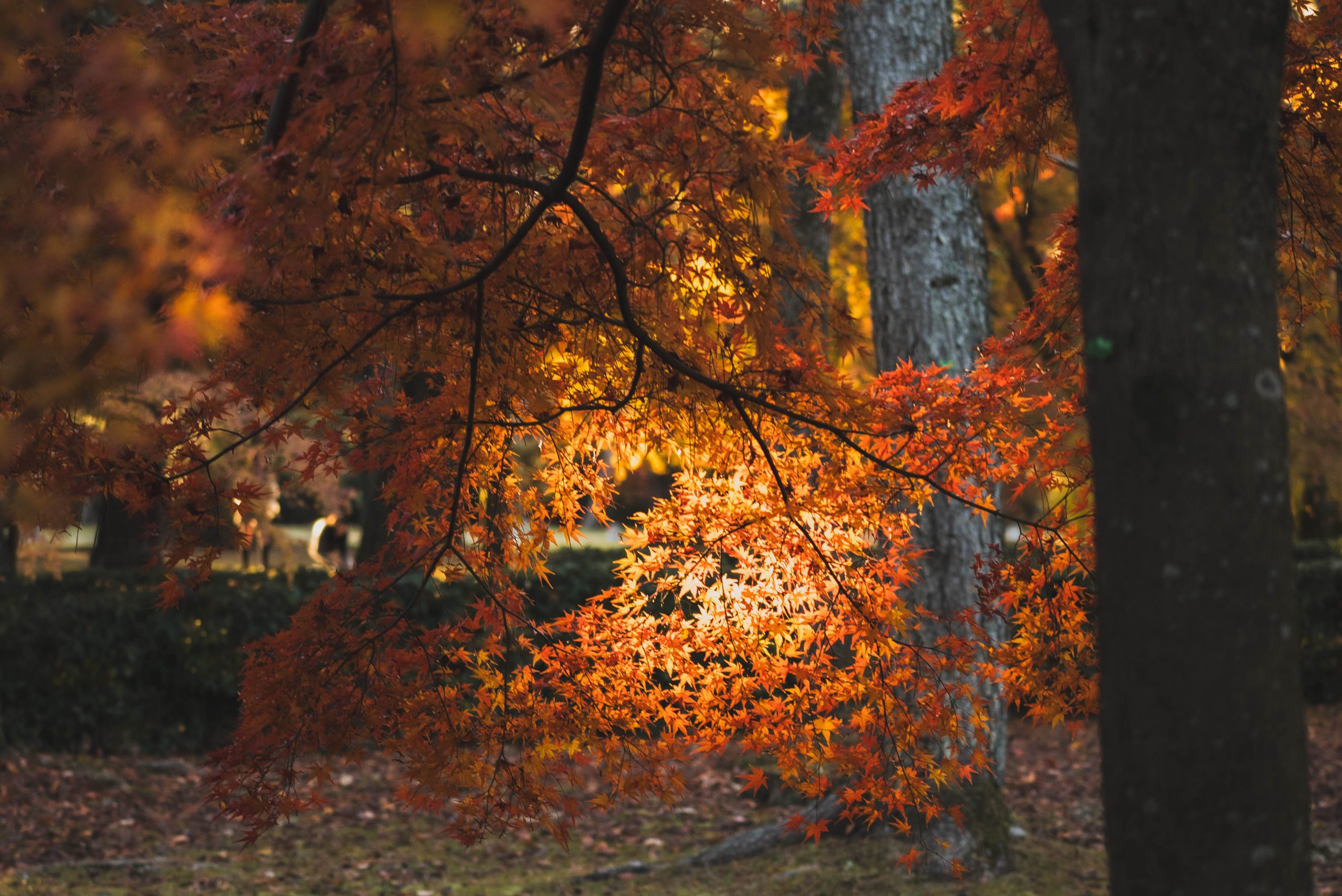
We leave this tourist bustle behind us and return to the center of Kyoto. The day is already coming to an end when Thomas takes me to Kyoto Gyoen National Garden, a park close to our hotel. During the golden hour we enjoy the peace and the beautiful colors of the trees. It is a beautiful piece of nature in the middle of Kyoto, with an impressive temple and all without tourists.
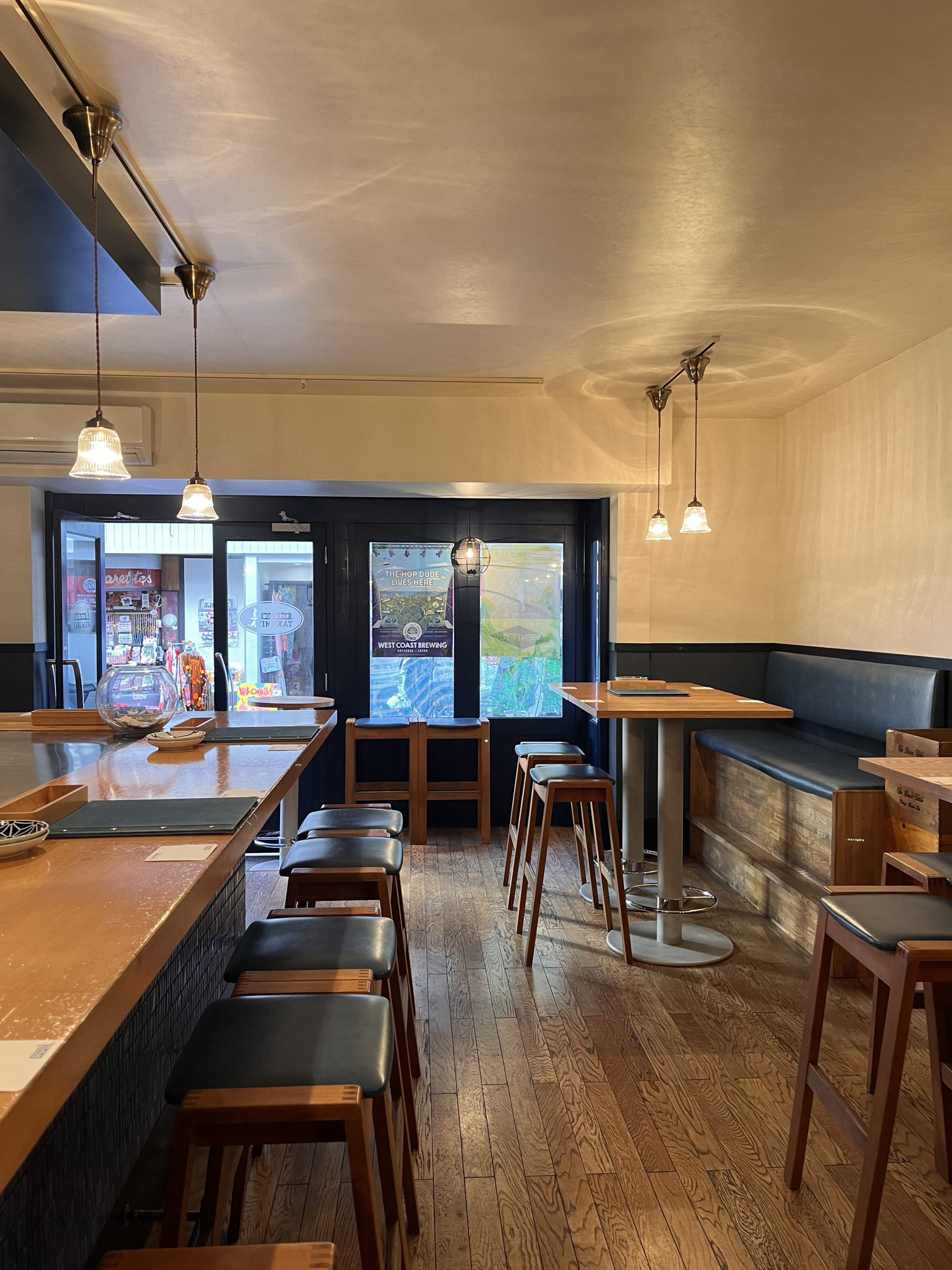
A Japanese beer cafe & food at the Nikishi Market
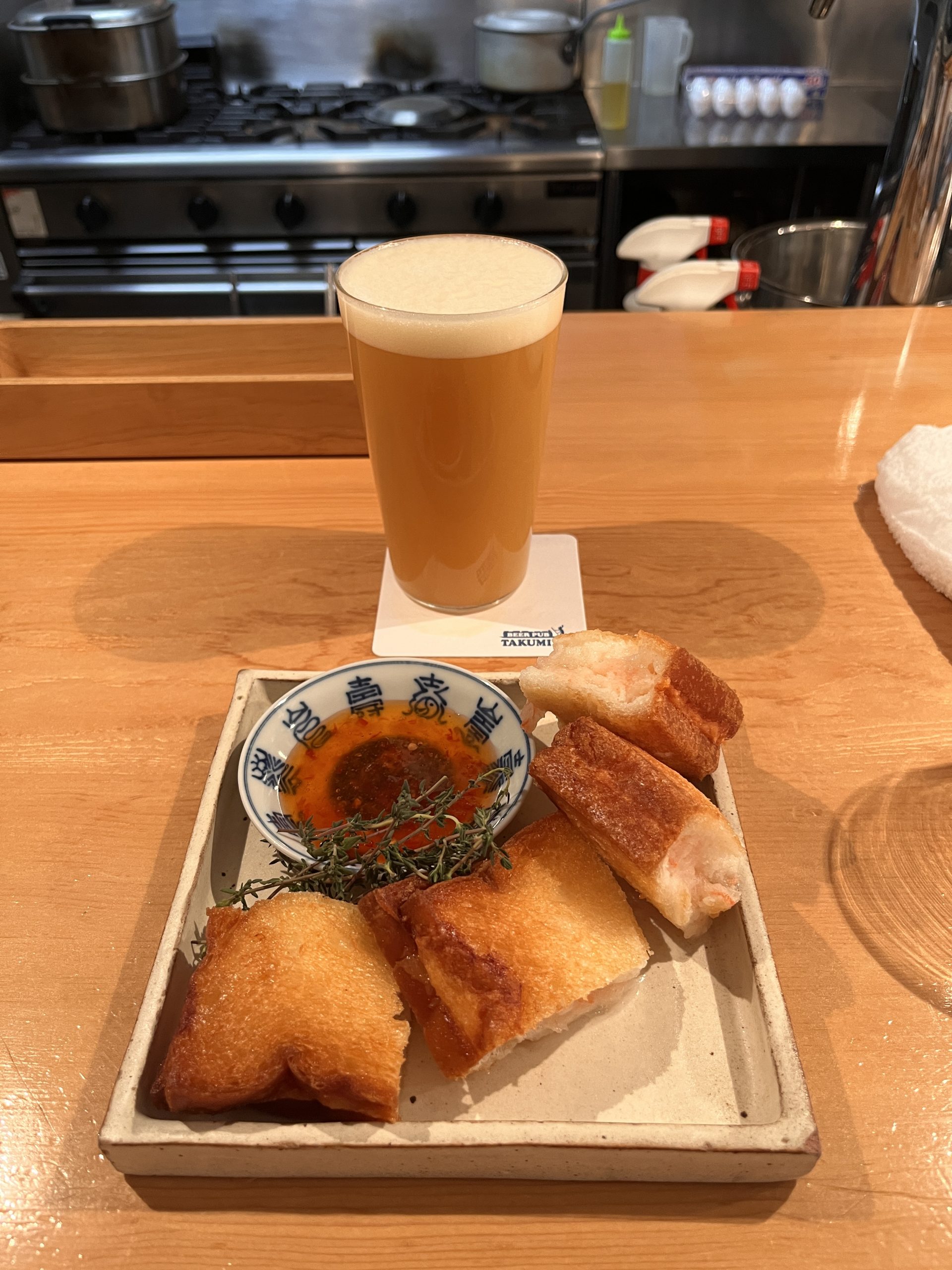
After such an exciting day during our city trip in Kyoto, we think it’s time for a drink and settle down at beer cafe Takumiya. Here we enjoy a local Japanese beer fresh from the tap and an accompanying snack.
Even though we got up early, we still have enough energy left to go to the Nishiki Market. This covered area is full of small food stalls, where you can find just about anything. Some dishes make me swallow hard and I don’t quite understand why people want to eat this. But the atmosphere is cozy! Of course there are also tourists, including ourselves, but especially many local Japanese. We end up in a few simple sake bars and taste different types of sake. I’m still not entirely sure if sake is really my thing, but one thing is for sure: it’s an authentic experience among locals.
Read here what our last day together was in Kyoto. And read more practical information about this city trip to Kyoto here.